Misis Blog – For Moms and Dads

facebook google twitter tumblr instagram linkedin
  • Home
  • FAMILY THREE
  • MOMMY TALK
    • HOME & LIVING
    • MARRIAGE
    • PREGNANCY
    • MOTHERHOOD
  • BABY TALK
    • BABY CARE
    • PARENTING
    • BREASTFEEDING
  • MONEY TALK
    • CAREER
    • BUDGET
  • ABOUT
  • PRIVACY POLICY
  • CONTACT


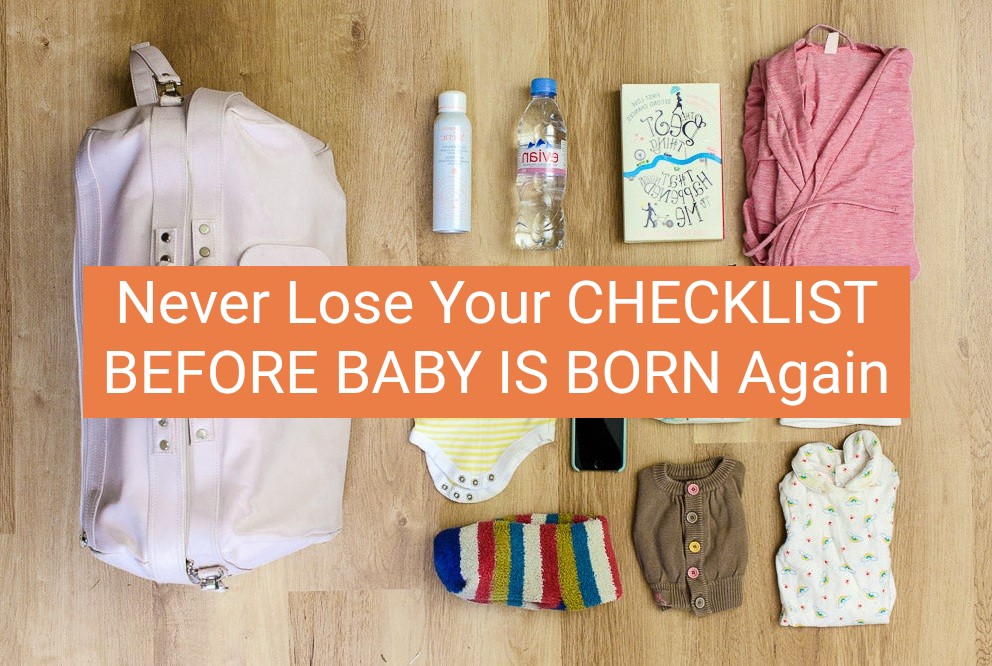
Never Lose Your CHECKLIST BEFORE BABY IS BORN Again


Having a baby is an exciting and life-changing event, but it can also be overwhelming as there are so many things to think about and prepare for. One thing that can help you stay organized and on track is to create a checklist of everything you need to do before the baby arrives. This can include everything from setting up the nursery to packing a hospital bag and preparing for the financial aspects of having a baby. By following this checklist, you can ensure that you are as prepared as possible for your new arrival and avoid the stress of last-minute scrambling.


Here is a comprehensive checklist to help you stay organized and prepared for your new baby:


1.Set up the nursery: This includes everything from setting up the crib and changing table to putting up curtains and decorations. Make sure you have all the necessary furniture and baby gear, such as a stroller, car seat, and diaper pail.


2.Stock up on essentials: You will need a lot of diapers, wipes, and other baby essentials, so start stocking up now. You may also want to consider purchasing some larger items, such as a breast pump or high chair, in advance.


3.Prepare for the financial aspects of having a baby: This includes budgeting for additional expenses and considering any potential changes to your income. You may also want to start a college savings plan or update your will.


4.Pack a hospital bag: Make sure you have everything you need for your stay at the hospital, including clothes, toiletries, and any medications you may be taking. Don't forget to pack a going-home outfit for the baby and a car seat for the ride home.


5.Plan for postpartum care: Make sure you have a plan in place for how you will manage the first few weeks after the baby is born. This may include arranging for help with childcare, meals, and household tasks.


6.Take care of yourself: Remember to prioritize your own health and well-being during this time. Make sure you are getting enough rest, eating a healthy diet, and staying hydrated.


By following this checklist, you can ensure that you are as prepared as possible for the arrival of your new baby. Don't be afraid to ask for help or delegate tasks to others if you need to. The most important thing is to take care of yourself and your new family.

January 11, 2023 No comments
Top 10 Tips With LACTATION COOKIES SIDE EFFECTS


Lactation cookies are a popular snack choice for nursing mothers, as they are believed to help increase milk production. While they can be a helpful tool for breastfeeding mothers, it is important to be aware of potential side effects and take precautions to ensure the safety and health of both mother and baby. 

Here are the top 10 tips for dealing with lactation cookie side effects:


1.Consult with a healthcare professional before starting to eat lactation cookies. It is always a good idea to speak with a doctor or lactation consultant before making any changes to your diet, especially if you are breastfeeding.


2.Choose a reputable brand of lactation cookies. Make sure to select a brand that uses high-quality ingredients and has a good reputation.


3.Follow the recommended serving size. Don’t eat more lactation cookies than recommended, as doing so could lead to an excess intake of certain nutrients, such as calories and sugar.


4.Be aware of potential allergens. Some lactation cookies may contain allergens such as nuts, wheat, or soy, which could cause an allergic reaction in some people.


5.Monitor your baby for any adverse reactions. If you notice that your baby is experiencing digestive issues, fussiness, or any other unusual symptoms after you start eating lactation cookies, stop consuming them and consult with your healthcare provider.


6.Consider alternative galactagogues. Lactation cookies are just one option for increasing milk production. There are many other natural galactagogues, such as fenugreek, blessed thistle, and fennel, that may be just as effective and have fewer potential side effects.


7.Don’t rely on lactation cookies as the sole source of nutrition. While lactation cookies can be a tasty and convenient snack, they should not be relied upon as the main source of nutrients during breastfeeding. A varied, balanced diet is important for both mother and baby.


8.Drink plenty of fluids. Lactation cookies can be drying, so it is important to drink plenty of fluids to help keep yourself hydrated.


9.Don’t eat lactation cookies if you are not breastfeeding. Lactation cookies are intended for nursing mothers and may not be suitable for non-breastfeeding individuals.


10.Don’t replace a healthy diet with lactation cookies. While lactation cookies may have some potential benefits, they should not be used as a substitute for a well-balanced diet. It is important to eat a variety of healthy foods to ensure proper nutrition for both mother and baby.


In conclusion, lactation cookies can be a helpful snack for nursing mothers, but it is important to be aware of potential side effects and take precautions to ensure the safety and health of both mother and baby. By following these tips, you can enjoy lactation cookies as a tasty and convenient snack while breastfeeding.

January 08, 2023 No comments


The internet has been very beneficial, particularly during the pandemic. Our kids have been able to adapt to an alternative way of receiving education through Online or Virtual Learning. The number of internet users have increased over the years, but more since the pandemic started. 


Many of these new users are children. They need to use the internet in the ‘New Normal’ of online or distance learning and researching homework.


Why Internet Safety Is Important in the New Normal

Despite the vast advantages of technology, it is important to remember that the internet is open to everyone around the world. It's critical that you recognize the risks for yourself and others. According to UNICEF, around 8 out of every 10 Filipino children are at risk of cyberbullying or online abuse.


Due to the ‘new normal’, children now use social media as a way to keep in touch with their friends. Many of the young people measure their popularity by the number of online friends or followers they have on social media — they boast their high number of online friends or even flaunt their ‘online’ girlfriend or boyfriend. But do they really know who the person behind it?


If you are going to discuss Internet safety with your kids, make sure to cover the topic of ‘stranger danger’. Young Filipinos are in danger of falling in the trap of online predators. Many have been victims of ‘catfishing’. 

According to a government study, the Philippines has a tragically high rate of internet-based violence among children; 1 in 2 children is a victim of online violence. SaferKidsPH says among the worst types of violence are online exploitation and sexual abuse.

Be cyber-informed

To help tackle this problem, children in the Philippines must be educated on the risks and be aware of the actions to take when faced with danger online.


Educate your kids, siblings, or fellow parents. There are plenty of resources available to educate on the safe use of the internet. Twinkl has published a free online safety guidebook designed especially for parents and teachers in the Philippines to help keep children safe online.


Free education for children

There are online courses such as Stairway Foundation Inc.’s free cyber safety courses for kids. It’s important that kids are educated and trained on how to safely use the internet, this way they can make safe decisions when they are online.


Top tip: Younger children learn better through visual aids like posters or interactive activities and games. You can use Twinkl’s internet and phone safety multiple-choice quiz game to stimulate thinking actions to take during certain situations and check their knowledge.


What can you do to minimize the digital threats at home?

Explore child-friendly search engines


Kiddle.co search engine specifically designed for kids powered by Google. It offers safe web browsing for children as results are vetted by editors to filter out inappropriate content for kids.
Enable parental control on your children’s devices

The use of parental controls reduces the risk of your kids viewing inappropriate content online. You should also monitor your child's internet activity and use age-appropriate settings on devices in order to avoid digital threats. Here’s a guide on setting parental control on different devices.

Set time limits — screen time

It’s no doubt that the screen time for children has increased since the pandemic. It’s important that children develop healthy screen time.

Too much screen time can have a negative impact on children’s sleeping patterns, concentration, mental health and physical activity. That’s why it's important children are aware of the importance of taking regular breaks and using screen time optimally and effectively.


5 Important Internet Safety Tips to Teach Your Children

1. Do not post or share your personal details to strangers online.

Personal details include the child's school name, home address, bank account details, location, and full name.


2. Think before you accept and connect.

Only accept a friend request from people you actually know. You can never be sure whether the person you are talking online is really who they say they are.


3. You should never meet anyone you met online in person.

If someone asks to meet you, tell your parents, guardian or friends right away. Some people may not be who they say they are.

4. Never respond to horrible or rude posts or emails.

Think about your behavior as well. Be nice, do not be a bully. Unfriend or block anyone you find inappropriate, horrible, or bothersome.

5. Think carefully before posting and sharing a picture or video yourself.

You may be blackmailed in the future by anyone who has your personal photo or video.

___

April 08, 2022 No comments


My hair started changing color when I was 15. By my 20s, I had a lot of white hair already. Here's how I accepted my premature graying.


Back in my third year in high school, when I was 15, I freaked out when my once jet-black hair started having very light brown strands. Afraid to dye my hair, I tried to use blackening shampoos but to no avail.

I had my first white hair in my fourth year in high school, at 16, when one of my classmates joked that I had “fairy hair.” More strands became light brown until they eventually turned white—shockingly white strands, not gray.

Denying my premature aging

I did my best never to pull out the white strands, or sleep or tie my hair when it was still wet, hoping my “graying” will stop. But it didn’t.

In college, I regularly dyed my hair. Since it was “illegal” to dye your hair according to our university’s absurd rules, I kept it subtle by coloring it dark brown.

When I started working, the more white hair I got. I thought it was just because of the stress. But the more I colored my hair, the drier it became, so I stopped coloring it for some time.

I was told I should just bleach my hair silver and go full Targaryen, but I didn’t want to, and my “natural” hair color started to grow on me—I’m not even sure how I would describe my hair.

Salt-and-pepper look won’t make the cut, because it’s more of tricolor: jet black, light brown, and white. Just like Papa’s when he was younger.

Genetics and accepting my white hair

Then I started fully accepting that maybe I really got it from my Papa—premature graying due to genetics (along with my astigmatism, my temper, my “manly” body hair, and my talent for writing—thank you and I love you, Pa!)

One day, now that I am nearly 30, I was looking at the mirror and surveying my white hair when my three-year-old came up to me and asked, “What you doing, Mom?”

“Looking at my white hair, langga.”

“Wow, Mommy, so beautiful hair! White hair like Elsa?”

That’s when I remembered one of my high school best friends telling me one time, when I was fussing over my hair, “We love you no matter what hair color you have!”

And I realized, that’s what really matters: It's not about how you look, nor how your loved ones accept you, but how you accept yourself the way you are.

It warms my heart how my daughter sees everything as beautiful and, for things that are unfamiliar to her, as something interesting and amazing. Children have that innocence to see things as they are, not as how it should be.

By accepting my flaws, I'm hoping to set a good example to my daughter to love herself unconditionally. 

But I realized, she is the one setting a good example for me.
September 02, 2020 No comments


Potty training is a major milestone but often considered as one of the most challenging parts of early parenting.

I have read countless online comments from moms—both first-time parents and veteran ones—about the long and difficult process of potty training.

There's also the years-long challenge of overcoming bedwetting.

However, every kid is different. Some take a lot of time to potty train, while others seem to be a natural at it.

If you're in the trenches of potty training, here are some tips for stress-free potty training:


1. Wait and let your child's readiness lead

A child's ability to be potty trained is highly dependent on his/her readiness, both on the cognitive and physical level.

Parenting experts say that while it's considered developmentally "appropriate" to expect 18- to 24-month-olds to be potty trained, some children are not ready yet until they are 3 or 4 years old.

And if you have a boy, it's more expected that they get ready later than girls do.

So if it seems that your toddler isn't interested in potty training yet, the best course of action is to wait and let your child's readiness lead.


2. Know the signs of potty training readiness

More often than not, you may be misled by online articles and books claiming that if you use their same exact methods, you can potty-train your child in just a few days.

However, that's not always the case. If you introduce potty training prematurely, the chances of success are slim.

Knowing the signs of potty training readiness can give you a good idea whether it's the right time for your toddler to be potty trained.


Some of these are the following:

  • Able to maintain being "dry" for at least 2 hours or during nap times.
  • Can walk and/or run steadily.
  • Can pull his/her pants down and/or up.
  • Can sit down patiently in one place for 5 minutes.
  • Is curious about your bathroom habits.
  • Can become uncomfortable when his/her diapers are dirty.
  • Can follow simple instructions.
  • Can verbalize when he/she needs to go.


3. Encourage, encourage, encourage

Encouragement goes a long way when you're training your toddler—be it for potty training or many other developmental milestones.

Praise is just not enough, such as "Good job!"

Be specific in what you find delightful. For example, "Wow, you were able to pee in the potty just in time!"

And whenever there are accidents—and there will be many—stay calm and unruffled, and really mean it.

It's best not to redirect the child. You need to acknowledge his/her accident yet still encourage the toddler.

For example, "Oopsy! You peed in your underwear, and now you're upset that you're dirty. But you did a good job in letting me know that you're peeing! Let's try to pee in the potty next time!"

Or sometimes, a simple "Oh, darling. That's okay. Thank you for trying!" worked really well for us.


4. Read them books, sing them songs

I'm a huge fan of using picture books and songs to teach my toddler.

It's also a fun way to teach children and effective tools in helping them recall the lesson better.

Here are some of the books and songs/videos I used to help K during our potty training:

"Potty Time!" by Caroline Jayne Church

I love how simple and fun this book is, with its short and cute sentences that rhyme, and the "Flush me!" button.


There's also a book reading video of Potty Time! here:


Potty Training Song - Cocomelon

What parent has never heard of Cocomelon? Our toddler loves this particular video


However, when we potty trained, I made up a special potty training song for my toddler that's simple enough so that she can also sing along with me while she peed/pooped.


5. Be gentle; let go of perfection

Lastly, be gentle and kind, both to your toddler and to yourself. Let go of the vision of perfection.

Remember, if your toddler hasn't been potty-trained yet, it's highly likely that he/she isn't ready.

No one keeps a record of your parenting wins, and there surely is no competition on who the best parent is in the world.

I know it's easier said than done. But here's one thing that helped me whenever I try to teach my daughter something:

A child is a whole person from the day he/she is born. 
And as with every person, we learn at our own pace. 
Trust your child.


____


In a previous post, I shared to you how our toddler was quickly potty-trained. If you'd like to know how we did it, head on to this post: How Our Toddler Was Potty-Trained at 2.6 Years Old

August 11, 2020 No comments


Kids spend a lot of time in front of a screen these days. In fact, children and teens between 8- and 18-years-old average more than seven hours of screen time a day.

According to the American Heart Association (AHA), that number should be closer to two hours a day. A

nd for children 2- to 5-years-old, screen time should be limited to one hour a day. 

When children devote too much time in front of a phone, tablet, computer, television, or any other kind of electronic screen, it can negatively affect everything from their sleep to their academic performance to their physical, social and behavioral well-being. 

Fortunately, there are plenty of practical ways to limit and monitor your children’s screen time. So, let’s take a look at a few of these methods, as well as some digital-free alternatives:

Allocating Screen Time 

First of all, it’s important to understand that you don’t have to completely deprive your kids of using electronics at home.

That would be stealing their joy, and you don’t want to do that!

It is important, however, that you set guidelines for screen time each day. 

For instance, you could allow your kids to watch TV or play their video games for an hour after they do their homework or after dinner.

Or, you could give them an hour of screen time to use as they please.

If your child really loves to do activities on a tablet or smartphone, you can find ways to sneak some learning into this time.

For example, there are many online lessons that will help teach math in practical, real-life ways, as well as apps that can help your child learn a new language. 

The sky’s pretty much the limit when it comes to educational software; find what your child responds to and try to find something that scratches that particular itch.

However you decide to do it, it’s essential that you stay firm in your time limit, no matter how much they beg you or charm you.

Just keep reminding yourself that, later on, you’ll be thankful you stayed strong!

Team Sports

One of the best alternatives to screen time for children is getting them involved in team sports.

There are many health, social, and behavioral benefits of playing team sports.

They provide kids with the opportunity to develop essential life skills, healthy habits, self-discipline, and responsibility, among many other things. 

Also, they can go a long way in improving self-esteem.

It might take trying out a few sports before your children find ones that they like, so instead of buying all new gear and equipment, consider getting second-hand or discounted items on sites such as eBay. 

Viewing Shows and Games with Your Child 

Another approach is to make the most of your children’s screen time by viewing content with them.

Whether it’s a TV show, video game, or anything else, consider watching and playing with your children every now and then. 

This can provide an opportunity to critically think about and discuss the content, and it also allows you to see exactly what kind of stuff your children are watching/playing.

With this approach, perhaps your children will think about what you would say if you're not there viewing the content with them. 

Removing Devices from the Bedroom

Finally, consider taking all electronic screens out of your children’s bedrooms.

This way, a TV, computer, tablet, smartphone, or another device won’t be part of their nighttime routine. 

This can help them sleep better, and it will give them a chance to form new routines such as reading, journaling, doing puzzles, and doing other digital-free activities. 

___

Limiting your children’s screen time can benefit their overall health and well-being in profound ways.

However, it’s up to you to come up with a daily time limit — and be sure to enforce it.

Encourage your kids to try team sports, and find affordable gear and equipment on sites like eBay. 

Lastly, actively engage with your children on the content they’re watching and playing, and consider removing electronic screens from their bedroom.
April 15, 2020 No comments


--


Title: Buddhism for Mothers: 
A Calm Approach to Caring for Yourself and Your Children
Authors: Sarah Napthali
Personal Rating: 5/5 

Summary:
Sarah Napthali provides great insights and tips on how the principles of Buddhism can be integrated into the daily lives of mothers (or rather, any parent of a child). The book touches on ways to practice mindful and calm parenting despite the chaos and frustrations of parenthood.

__

A Book for Mothers/Parents, Not a Usual Parenting Book

The author was quite transparent at the very start of the book: Buddhism for Mothers isn't your usual parenting book.

It is a book specifically written for mothers to help us deal with the struggles we usually face as parents.

While it doesn't provide specific tips on how to handle challenging child behaviors, as most parenting books do, the book details ways on how to practice a calmer approach to parenting.

This, I believe, is very beneficial, because it strengthens the idea that to have a happy child, you first need to focus on being a happy parent.

An Easy-to-Digest Introduction to Buddhism and Mindful Parenting

The author succinctly and accurately connected the Buddhist way of life with parenting, in a way that's easy to digest even when you are not a practicing Buddhist.

This was my introduction to basic Buddhism principles, all of which contribute to helping me as a mother to be more mindful and calm: loving kindness, compassion, sympathetic joy, and equanimity.

I also like how the author outlines her topics in a way that systematic and organized, without overwhelming you with too much information.

I especially like how she provides tips on how to start meditation amidst the busy and chaotic life of a parent.


Applicable Even to Non-Buddhist Practitioners

I have always been a devout Roman Catholic, and although I read Buddhism for Mothers by heart, it didn't feel like it was exclusively meant for mothers who are Buddhist practitioners.

In fact, one of the many appeals of Buddhism is that it doesn't strictly bind you to its practice and allows much flexibility in terms of "membership"—that it is not a religion, per se, but a way of life and the changing of the mind.

All of the teachings in the book are applicable to anyone, not only to parents who are actively practicing Buddhism.

Reading the book and slowly applying it into real life, I found that it has definitely helped me transform my way of parenting and in the way I deal with difficult thoughts, emotions, and situations that come with motherhood.

The Verdict

Buddhism for Mothers is definitely something that I would recommend to all my mom friends, and even to dads as well. 

It's a beautiful book that's easy and quick to read, a good breather to help you realign your thoughts and be calmer and more gentle. 

It's one of the books that has helped me greatly in dealing with my anxiety and anger, and I hope that other parents can find this book helpful too.
February 04, 2020 No comments


All mothers, whether you're a first-time mom or a "veteran" mom of multiple children, go through a period (or even a constant state) of stress every single day. 

Studies have shown, however, that the physical, emotional, and psychological stress of motherhood is more apparent in stay-at-home moms (SAHMs) and moms who work from home (WAHMs). 

Is Self-Care Even Possible for SAHMs and WAHMs?

That is why us SAHMs and WAHMs often get told to practice "self-care."

As a frazzled first-time parent, I often ask myself how self-care is even possible when everything—and I mean everything—is in one place all at once: taking care of my baby (and my husband), taking care of the household, working on my homebased job, and more.

However, as our little one grew and became a little more independent, I've found several ways to practice self-care without having to splurge money or going through the stress of logistics (i.e., traveling with baby, even to the mall).

Here are four simple self-care tips for stay-at-home moms that you can do in the comfort of your own home:


1. Daily skincare routine

If there's one thing my mom taught me, it's that you should always take care of your skin, as it's practically the most prominent part of your body.

However, most moms I know never even have the time to take a shower, much less taking the time to do a skincare routine every day.

Knowing that I'm not getting any younger and the stress of motherhood will only hasten my aging, I made it a point to insert a (non-negotiable) skincare routine every day.

I only ask my husband and our little daughter around 5 to 10 minutes a day (at night) for me to complete my daily skincare routine.

It not only makes my skin feel better, but it also makes me feel more confident (and less losyang)!

Photo courtesy of Human Nature


This is NOT a paid advertisement by Human Nature, by the way. I just really love their products :-)


2. Online shopping and food deliveries

The thing about working or staying at home the whole day is that it somehow grows on you—you become too lazy to go out! 

Which is why Shopee, Grab Food, and Food Panda have become my best friends ever since I started working from home. 

It's just so convenient to order stuff straight to your house, or have your cravings delivered to you rather than taking the time to cook. 

And even if there are times shipping fees are not free, the amount of money entailed when going out (i.e., gas, time for commute, eating out, etc.) is relatively more expensive than shouldering a few or couple hundred of pesos for delivery.

I've never been much of a shopaholic when I was still single, but retail therapy sure makes me so happy now that I'm a mom—especially when most of the things I buy online are for our little girl.

Tip: Always, always take your budget into consideration when shopping online. Don't go overboard!

3. Hobbies like reading, watching TV, or playing games

One thing I learned from "veteran" moms is to never, ever forget about who you were before becoming a parent, and that includes retaining your hobbies as much as possible. 

It's all too easy for new moms to get "swallowed" by their new role—I know I did—and it took a toll on my psychological welfare, having to deal with my identity crisis.

As our daughter grew older, I started having a little more time for myself and therefore can accommodate my hobbies. 

For moms, it's nice to have laidback hobbies that you can do at home, such as reading books, watching Netflix, or playing games (I love the Sims 4!). 

Do something fun every now and then!

4. Massage from your husband or little one

I love massages! But the thing is, it can get quite expensive, and the logistics of having to leave our little girl at home with just Daddy (or bring her to the massage parlor!) is just too stressful for me.

That's why I go for home service—for free, because my masseurs are my husband and/or our little girl! 

Don't get me wrong; it's not child labor. Our daughter is still small and light enough to walk safely on my back and give me a "massage." You get the picture.

It's a win-win: I can get the rest and relaxation I want, while at the same time I get to bond with my family. 


How about you?

Self-care is often overlooked by stressed-out moms, because we sometimes fear it's selfish. But you can't pour from an empty cup. Recharge, relax, and give yourself some slack sometimes.

How about you? How do you practice self-care? 

January 16, 2020 No comments


Start the year right by adopting a regular skincare routine!

I know it seems unlikely to have a decent skincare routine without spending an insane amount of money on beauty products.

However, as a frugal mom, I've found cheap (and all-natural) alternatives to expensive "cult favorites," and I can say that these worked really well for my skin type (I'm acne-prone)!

I use several different Human Nature products for my daily skincare routine.

This is NOT a paid advertisement for Human Nature. I just really love their products :-)
Prices are based on their 2019 catalogue.

Photo courtesy of Human Nature

Daily cleansing: 

Human Nature Acne Defense Facial Wash (169.75)

I like how this facial wash so light and cool to the face. 

It doesn't lather, though, which is typical for most natural-ingredient products. A pea-sized amount goes a long way. 

My 100ml bottle has been with me for almost a year, and I still have about 30% to 40% of it! 

And that's for cleansing twice a day: in the morning and before sleeping at night.


Toning: 

Human Nature Acne Defense Face Toner (109.75)

The best thing about this toner is that it's not harsh to the skin. 

It does have a leafy smell, though, but it's only expected, as it is tea tree-oil based (but not at all oily in consistency!). 

I tone once per day, after my night-time facial cleansing.


Spot Treatment: 

Human NatureAcne Defense Solution Gel (199.75)

As someone who has been plagued with acne since puberty, Human Nature's Acne Defense Solution Gel is the best spot treatment I've ever tried!

It doesn't dry out and flake your skin, unlike Benzac, and it doesn't have a creamy whitish tinge unlike the various Chinese products I used before in my teenage years (lol).

I use it once a day at night, but during my acne-prone days, I use it in the morning as well. It blends well to your skin, so you can wear makeup after.

Photo courtesy of Human Nature

Moisturizing: 

Human Nature Sunflower Beauty Oil (174.75)

One of the most golden lessons my mother taught me is that you need to moisturize even though your skin might be oily, especially when you start to age (I'm in my late twenties). 

I resisted my mom's advice because most of the moisturizers in the market are just so heavy and sticky on the face.

Human Nature's Sunflower Beauty Oil, however, seals the deal. 

Surprisingly, it absorbs quite well on the skin and is not at all oily and sticky once you've applied it! It leaves a dewy, Korean-glass skin effect on your face.

I use it usually in the morning, with just one pump from its bottle (it already goes a long way).

It's great for moisturizing other parts of the body too, such as the soles of your feet or even your hair.

Photo courtesy of Human Nature

Twice-a-Week Exfoliating: 

Human Nature Detoxifying Mask + Scrub (P249.75)

Just as important as cleansing and toning, I learned that you also need to exfoliate your skin twice or thrice a week. 

I'm not a big fan of exfoliating tonics that would make your skin peel, so it was such a delight to discover Human Nature's Detoxifying Mask + Scrub.

As the product name suggests, you can use it as a mask (leave it on your skin for a few minutes), or as a scrub. 

I love how it makes my skin feel smoother and far more supple. What's more is that it's quite gentle even on sensitive skin!


Sunscreen as Needed: 

Human Nature SafeProtect for Babies and Kids (299.75)

I don't go out that much, so I don't use sunscreen every day. 

But when I do, I use Human Nature's SafeProtect SPF30 for Babies & Kids. It's not specifically for the face, but I have it on hand for my daughter, so I try to make use of it for me as well to save money (lol).

What I like about it is that it's light on the skin and doesn't leave much of a whitish, creamy tinge when you apply it (it blends really well!).

And it has a really nice fruity smell too :-)


___

    Again, I'd like to repeat that this isn't a paid sponsorship by Human Nature.

    I really like their products because they are eco-friendly, easy to buy, and really affordable!

    Imagine, all these would last me for at least 3 to 6 months! :-)

    How about you, any affordable skincare products you love?
    January 06, 2020 No comments
    Older Posts

    ABOUT THE AUTHOR

    My name is Kristenne, misis to Jerome and mommy to Kitty. I'm a work-at-home mom, writer, and editor. Learn more about what my blog is in the About page. If you'd like to work with me, or you have other questions and concerns, please feel free to contact me.


    Follow Us

    INTERESTING TOPICS

    BABY CARE BABY TALK BLOGGING BREASTFEEDING BUDGET CAREER CEBU BLOGGER FAMILY THREE HOME AND LIVING LIEBSTER AWARD MARRIAGE MOM BLOG MOMMY BLOGGER MOMMY TALK MONEY TALK MOTHERHOOD ONE AND DONE ONLY CHILD PARENTING PARENTING BOOK REVIEW PHILIPPINES POTTY TRAINING PREGNANCY PRODUCT REVIEWS TRIANGLE FAMILY WEDDING

    recent posts

    FOLLOW ME @INSTAGRAM

    Created with by ThemeXpose Shared by Way Templates